

Hall of Fame
"Inspiring, Innovative, Ingenuous, Influential, and Impressive"
Induction into the SEQUINS Hall of Fame is the Society's highest honor reserved for those who have made seminal career contributions to advancing the field of equity neuroscience and improving the brain health of disparate populations
Inductees for 2026
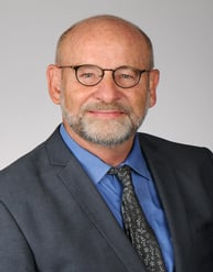
Robert J. Adams, MD MS
Led two NIH funded, multi-center clinical trials, STOP (1994-2000) and STOP II (2000-2005) , which were the first randomized trials of stroke prevention in sickle cell disease & any childhood condition.
Established REACH MUSC Stroke Network, which was the first hub in a statewide telemedicine network to provide evidence-based stroke care to underserved rural communities in South Carolina.
Led the American Heart Association funded WISSDOM center grant team (2014-2019) which examined ways to bridge disparities in stroke recovery by bringing together scientists from multiple disciplines to explore why some people recover better than others.
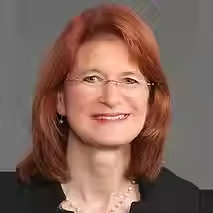
Cheryl D. Bushnell, MD MHS
Led NIH funded research which sought to identify biological markers associated with ischemic stroke in women and establish which are influenced by sex hormones or menopausal status.
Led NIH funded research which examined the influence of hormone replacement therapy on stroke severity in women.
Led the only two American Heart Association Guidelines for the Prevention of Stroke in Women (2014 and 2024).
Organized the first NIH-sponsored multidisciplinary conference on the study of stroke in women (2005).

Moira K. Kapral, MD MSc
Evaluated stroke care and outcomes in different populations and on the development of stroke quality indicators
Investigated association between immigration status and stroke care outcomes
Examined sex disparities in stroke care and outcomes to optimize discovery
Assessed stroke care and outcomes in rural settings of Canada

Lewis B. Morgenstern, MD
Created and launched the BASIC Project, the only U.S. population-based stroke surveillance project focused on Mexican Americans and one which has received continuous NIH funding since 1999 and resulted in >150 peer-reviewed publications.
BASIC & BASIC-Cognitive shed light on qualitative & quantitative differences in stroke & cognitive impairment incidence & outcomes between Mexican Americans and Non-Hispanic Whites.
Pioneered studies in stroke behavioral interventions & community engagement.

Barbara G. Vickrey, MD MPH
Principal Investigator for the NINDS funded “Los Angeles Stroke Prevention/Intervention Research Program in Health Disparities” U-54 Program, which included the Secondary Stroke prevention by Uniting Community and Chronic care model teams Early to End Disparities (SUCCEED) Trial
Senior investigator on a study, which showed that collaborative care management was associated with elimination of disparities in dementia care quality between caregivers with lower educational attainment vs. more education.

Gretchen Birbeck
Title
How brain health is overlooked in ‘cerebral’ malaria research, care and public health planning
Objectives
To review the evolving epidemiology of malaria. The overall burden of disease has not changed in 10+ years despite eradication efforts and vaccination programs. Instead, the disease is becoming more concentrated in the most deprived regions of the world as well as those areas heavily impacted by climate change
To discuss the neurological burden of disease resulting from severe malaria, highlight systematic ways in which this burden is underestimated and discuss the underlying reasons for this phenomenon of devaluing brain health
To review how authoritative global health entities responsible for clinical care guideline development and essential medication selections neglect brain health in LMICs for severe malaria as well as other neurological conditions
Brief Bio
Gretchen Birbeck has served as a physician, medical educator and researcher in sub-Saharan Africa since 1994. Her work aims to elucidate the mechanisms of common neurological injuries in the region and identify modifiable risk factors so that feasible, affordable, evidence-based interventions to prevent or ameliorate neurologic injury can be evaluated and broadly implemented. Having completed medical school at the University of Chicago, she trained as an adult neurologist at Johns Hopkins with subsequent postdoctoral studies in health services research (UCLA), epidemiology (UCLA), pediatric epilepsy/EEG (Johns Hopkins), tropical medicine (Liverpool School of Tropical Medicine), and clinical trials (NINDS). She conducted the first prospective cohort studies evaluating long term neurological outcomes in pediatric cerebral malaria survivors. As a clinical trialist, she has led NIH-funded studies of potential neuroprotective medications to prevent malaria-related brain injuries. Her ongoing research programs, funded through an NINDS Research Program Award, include a consortium of eight study sites in Zambia and Malawi spanning major urban and extremely rural settings. She serves as program director for the NINDS-funded TRENNDZ D43 training program, Training for Research Excellence in Neurological NCDs in Zambia.
Disclosures
Consultant for Blue Spark Technologies
Editorial Board for the Lundbeck Foundation’s Neurotorium
Advisor for NeuroTech
Advisory Committee for the Epilepsy in Africa Project (BAND Foundation and UCB Innovations and Health Equity Fund)
Executive Committee for the Zambian League against Epilepsy.
Grant funding from US NIH NINDS and FIC
In addition to my US-based faculty position, I hold formal academic and administrative appointments at Zambia’s University Teaching Hospitals

James Galvin
James E. Galvin, M.D., M.P.H. is Professor of Neurology and Psychiatry & Behavioral Sciences, and the Alexandria and Bernard Schoninger Endowed Chair for Memory Disorders at the University of Miami Miller School of Medicine. He is Division Chief for Cognitive Neurology, Founding Director of the Comprehensive Center for Brain Health, and Director and Principal Investigator of the Lewy Body Dementia Research Center of Excellence. Dr. Galvin has authored over 425 scientific publications (h-index=78). Dr. Galvin has received over $120 Million in research funding from the National Institutes of Health and private foundations.
Dr. Galvin’s research focuses on four themes:
(1) Developing and validating new clinical assessment scales to improve detection of cognitive impairment to improve health outcomes across diverse populations;
(2) Studying vulnerability and resilience factors on the future risk of cognitive impairment;
(3) Characterizing the clinical, cognitive, behavioral, and biomarker features of neurodegenerative disorders; and (4) Creating novel precision-medicine based interventions based on individual phenotypic, biomarker, epigenetic, and genomic profiles aimed at brain health, risk reduction and dementia prevention.

George Howard
Dr. George Howard is an Emeritus Distinguished Professor of Biostatistics at the UAB. He received his training in biostatistics was from the University of North Carolina at Chapel Hill. His career has a dual focus of observational studies cardiovascular epidemiology and in the direction of coordinating centers for multi-center randomized clinical trials. For the former, he was the initial PI (and remains one of the multiple PIs) for the REasons for Geographic And Racial Differences in Stroke (REGARDS) project, a U.S. national study developing a cohort of 30,239 individuals to provide insights to the excess stroke mortality and lower cognitive function among African Americans and Southerners. Previously, he was PI of the coordinating center for the Insulin Resistance Atherosclerosis Study (IRAS) and an original investigator in the Atherosclerosis Risk in Communities (ARIC) study. In the domain of clinical trials, he the PI of the Statistical and Data Management Center for the Carotid Revascularization for Primary Prevention of Stroke Trial (CREST-2), and the Coordinated, Collaborative, Comprehensive, Family-based, Integrated, and Technology-enabled Care (C3FIT). He has more than 600 publications with an H-index of over 130, primarily in the analysis of cerebrovascular and cardiovascular risk factors.

Edwin Trevathan
Edwin Trevathan, M.D., M.P.H. is the Amos Christie Chair in Global Health, and professor of Neurology and Pediatrics at Vanderbilt University School of Medicine. A pediatric neurologist and epidemiologist, his current research programs include NIH-funded programs in sub-Saharan Africa on epilepsy epidemiology and genomics, status epilepticus outcomes and genomics, and task-shifting epilepsy and malnutrition screening, diagnosis and treatment to community health workers. His prior global health work has included projects in China, Central America, and multiple countries in sub-Saharan Africa. Dr. Trevathan’s prior leadership positions include Director of the Vanderbilt Institute for Global Health, Executive Vice President & Provost at Baylor University, founding Dean, College for Public Health and Social Justice, Saint Louis University, Director of the National Center on Birth Defects and Developmental Disabilities at the CDC, and Director of the Division of Pediatric Neurology at Washington University in St. Louis and Neurologist-in-Chief at St. Louis Children’s Hospital. Trevathan has served on many national and international committees, recently served as a member of the National Advisory Neurological Disorders and Stroke Council (NANDSC) of the NINDS/NIH (2019-2023). Dr. Trevathan has authored or co-authored over 100 clinical and scientific publications, and he lectures nationally and internationally.

Kristine Yaffe
Kristine Yaffe, MD is the Scola Endowed Chair, the Epstein Endowed Chair, and Vice Chair, Distinguished Professor of Psychiatry, Neurology, and Epidemiology, and Director of the Center for Population Brain Health at the University of California, San Francisco. Professor Yaffe is an internationally recognized expert in the epidemiology of Alzheimer Disease and Alzheimer Disease Related Dementias (AD/ADRD). As one of the foremost leaders in identifying modifiable risk factors for AD/ADRD prevention, Professor Yaffe and her colleagues were the first to determine that potentially 30%-40% of dementia risk is preventable. She pioneered investigations on the roles of estrogen, physical activity, and cardiovascular factors in AD/ADRD risk, and more recently, her research group has led work on the connections between cognitive aging and traumatic brain injury, sleep disorders, and life course exposures. With over 800 peer-reviewed articles (H-index=180), her work translating epidemiological evidence to improving population brain health has formed the cornerstone for dementia prevention trials worldwide. In recognition of these groundbreaking accomplishments, Professor Yaffe has received the American Academy of Neurology’s Potamkin Prize for Alzheimer Research, the NIH Robert S. Gordon, Jr. Award in Epidemiology, and the Department of Veterans Affairs John B. Barnwell Award for Clinical Research. Professor Yaffe was elected to the National Academy of Medicine in 2019.
Hall of Fame Inductions
DESCRIPTION
This distinction, the Society's highest honor, is given annually to a select group of accomplished and visionary leaders, who have made transformative career contributions to equity neuroscience research
Research primarily covering the areas of sex/gender, racial/ethnic, geographic, socioeconomic, and global
Induction during SEQUINS Annual Meeting
No more than five inductees each year
Inductees memorialized in virtual hall of fame
CRITERIA
Current Fellow of the Society of Equity Neuroscience at the time of nomination
Candidate must be a senior investigator of any scientific (basic, translational, clinical, or population) or professional background who has made outstanding contributions in the field of equity neuroscience in their lifetime
Evidence of mentorship of students, post-docs, residents, fellows, and early career faculty is important
Nominated by a Member of SEQUINS Board or Nominations Committee Member